




THE CHILDREN’S SESSION OF THE 29TH CSO FORUM
OUTCOME STATEMENT.
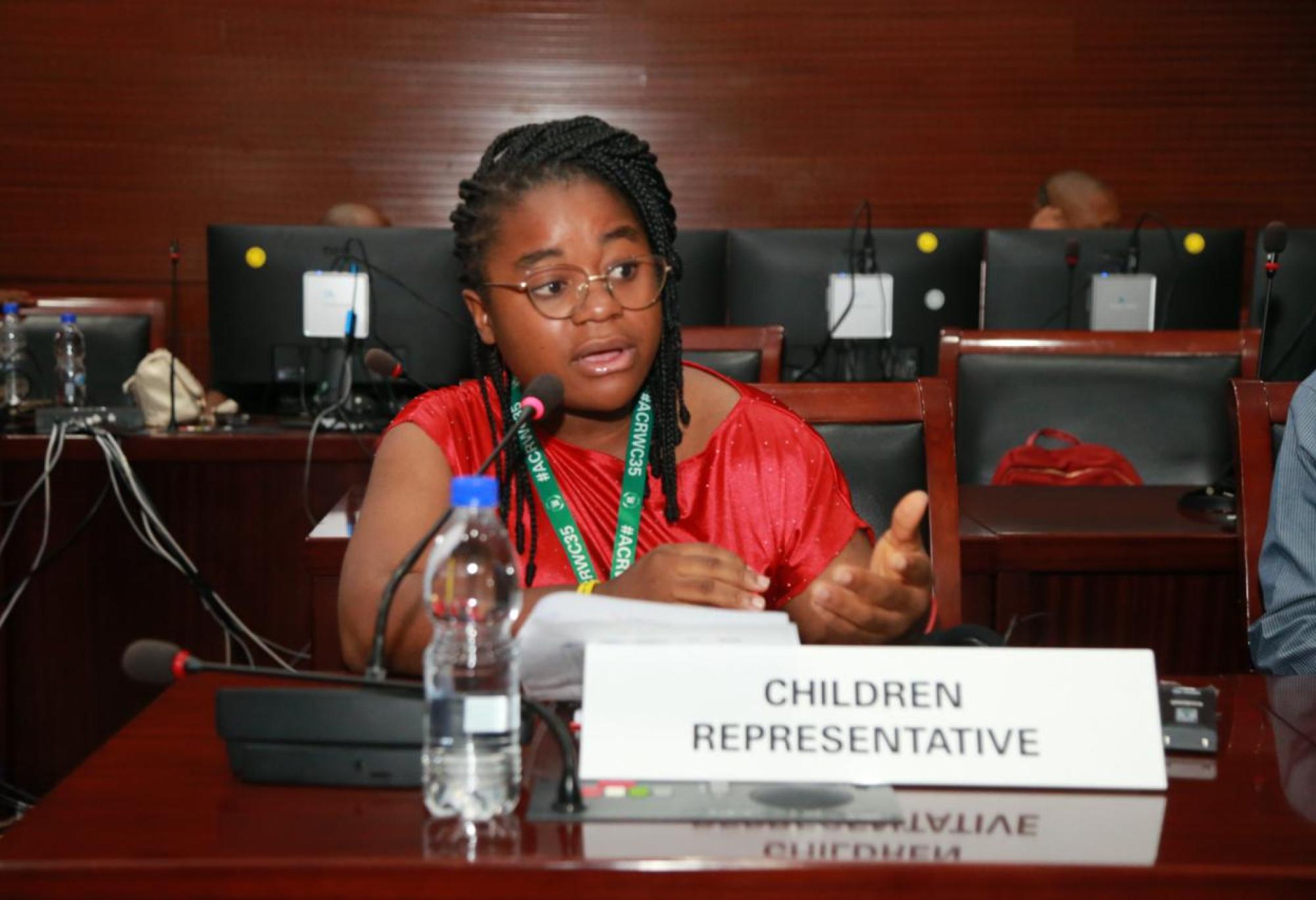
Honorable Chairperson and Members of the African Committee of Experts on the Rights and Welfare of the Child; representatives of African Union organs and Member States; national human rights institutions; development partners; civil society organizations; and, most importantly, Children of Africa, Good Morning! My name is Shekina from Cameroon, I am going to read this statement on behalf of all Children of Africa.
We, the children of Africa, aged between 8 and 17 years, gathered from all five regions, Eastern, Western, Central, Southern, and Northern Africa gathered virtually for the Children Session of the 29th CSO Forum on Saturday, 3rd October 2026, from 1200hrs-1500hrs (EAT). The three-hour session was convened under the theme,” WASH (Water, Sanitation and hygiene) and Children Rights.”
The continent of Africa is highly blessed with a vast of natural resources and water bodies however with increasing industrialization, rapid population growth, urbanization and climate change, those resources are slowly being depleted and can no longer sustain the demands of the growing population thus posing challenges to the children in the continent especially those in vulnerable situations. Women and girls are affected more as culturally the responsibility of fetching water and promoting hygiene and good sanitation is laid on them.
The African Charter on the Rights and Welfare of the Child recognizes access to Water, Sanitation and good hygiene as a fundamental right through article 14 of the charter which guarantees every child’s right to safe drinking water, good hygiene and great environment sanitation. This should be applicable to all children including those living in Vulnerable situations, humanitarian context, those in rural areas and those living in climate affected areas. In line with this provision, we gathered to:
To understand various contexts of Wash from different countries and regions
To highlight the specific challenges of water insecurities for both boys and girls.
To understand how accessible and affordable WASH services are
To understand the role of children in monitoring wash services.
To identify Wash Champions from the session.
From the session, we discussed how important WASH was as our right and its relation to other rights like education, health and child protection. Wash is our basic Right and should not be treated as a gift or favor. All children should be able to freely access WASH services regardless of their location, socio-economic status or their gender variation.
We also shared challenges experienced by both boys and girls as a result of water insecurities. These challenged cut across from school drop-out, teenage pregnancies, malnutrition and spread of communicable diseases, loss of dignity for girls, attacks on children as they search for water, kidnapping, online bullying and violence due to poor sanitation and hygiene, low self-esteem among many others.
For children to enjoy WASH Services and their rights in Africa, we recommend this to the following actors:
The CSO Forum
To continue giving children a platform for participation so they can share their experiences
To create awareness on WASH
To engage children in developing advocacy plans on WASH
To support WASH champions by amplifying their voices and giving them platforms to participate
To amplify the challenges experienced by children to the duty bearers
To design and implement projects in line with WASH, the projects should be inclusive
To build the capacities of the WASH champions and encourage
To monitor and track WASH budgets.
To run campaigns on the importance of protecting natural water bodies and conserving the environment.
To our governments
To make WASH services available and free of charge
To remove taxes on all menstrual products
To provide clean, and safe drinking water in all schools
To increase budget allocation for WASH Services.
Governments to provide periodic reports on WASH
To have monitoring frameworks and have children’s representatives
To appoint and recognize WASH Champions
To work together with CSOs to advance WASH Services.
To develop Community Based Child Protection Mechanisms, especially in conflict and humanitarian settings, water and sanitation must be part of protecting children, not an afterthought.
Have environmental conservation campaigns.
We ask that governments to put Articles 13 and 14 of the African Children’s Charter into practice by funding water, sanitation and hygiene facilities that children with disabilities can safely use in every school and involve them and girls, in planning these improvements and report their progress to the Committee.
C) To the African Committee of Experts on the Rights and Welfare of the Child. (ACERWC)
To have more children from the Five regions participate physically in their ordinary session and activities and listen to their views.
Encourage member states to include WASH reports in their periodic and complimentary reports.
To identify WASH champions and recognize them during ordinary sessions.
To translate the charter into more languages for children to understand their rights.
To take serious actions to countries violating the rights of children by Monetizing WASH services.
Strengthen accountability mechanisms to ensure children enjoy their rights as stipulated in the African Charter on the Rights and Welfare of the Child.
My fellow Children
To maintain our personal hygiene
To be champions of environmental conservation and maintain our sanitation
Report violations/challenges we face.
Have peer to peer learning on WASH and do community sensitization in our communities, schools and child rights clubs,
Embrace good habits that improve our hygiene and sanitation
Be our brother’s keeper in ensuring we understand our rights.
In conclusion, water is not a luxury, toilets are not a privilege, and a child’s ability to wash their hands should never depend on where they were born. Securing “Every Child, Every Drop” means ensuring safe water, clean toilets, and inclusive facilities for every child—especially in schools, where girls should learn with dignity and children with disabilities must be fully considered. Decision-makers must listen to children rather than speak for them, empowering them to participate, monitor services, and shape the decisions that affect their futures. WASH is more than water and environmental protection; it is the foundation of health, education, human dignity, and a fundamental right. Together, let us make Africa’s children great!
THE END.
Signed
Children of Africa
3RD October 2026.